

The Project Management Professional (PMP) credential is a professional certification that tells the world you know your stuff. The Project Management Institute (PMI) is the organization that issues the certification. PMP requires a rigorous application process and a challenging four (yes, four!) hour exam.
But fear not! I passed the exam the first time, and have outlined how I did it. I really wish I would have had a direct list of tips and tricks to make my exam prep feel more intentional.
You might be thinking “sure, well some people are just good at taking standardized tests.” And you’d be right. However, I am not one of those people. I simply followed the steps below and studied hard.
I don’t mean to imply that passing the PMP exam is easy, because that is not the case! In 2020 the pass rate for the PMP exam is 61%. I’m going to show you how to be part of that pass group.
what is the PMP exam?
The PMP exam comprises 200 multiple-choice questions. Only 175 of the questions are scored though. The other 25 questions are decoy or test questions. A decoy question is one that PMI uses to judge if the test has been compromised. It’s typically a harder or unrelated question, and if many people begin to get that question correct PMI knows somebody broke the code of ethics and shared the test questions. A test question is just what it sounds like; a question the PMI is considering for the next year’s test. Your answer is not counted but could be in the future.
The PMP exam is typically taken at a testing center on a computer. I’ll go into more detail about the exam setting below. Since COVID-19, PMI appears to allow people to take the exam at home via a secure portal, but I’m unsure if that will continue.
One final thing you must know before you begin studying for the exam: you must apply and be accepted as a member of PMI before you may sit for the exam. The application is no joke, so check out my post on How to Apply and Get Accepted into PMI, which will be coming soon.
Okay, now on to my study tips!

study tips
one: find the right study materials
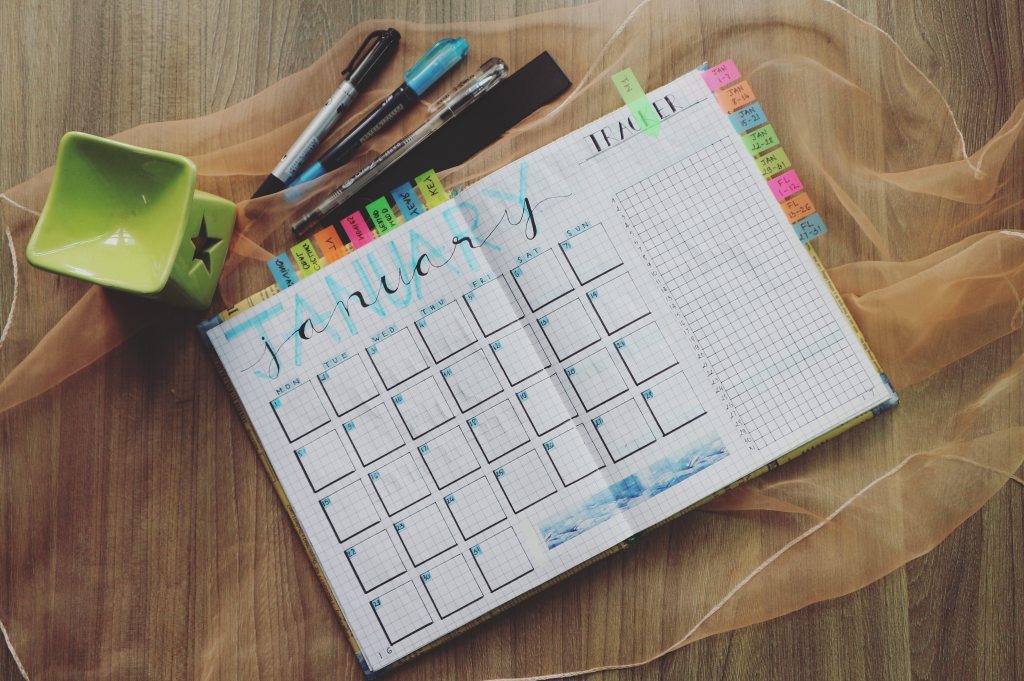
There are endless tools available for preparing to take the PMP exam. Everybody studies differently, so take the time to research the tools and select the ones that will work for you.
Here are the must-have tools for exam success:
- PMBOK book: this is considered the bible of PMP studying. The PMBOK guide, or Project Management Body of Knowledge, is considered the single source of truth by PMI (probably because they write it!). They are currently on their 6th Edition as I write this, but be sure to check before you buy. You’re expected to basically know everything in this book. I read through this book created notecards from the vocabulary words (you need to know the PMP definition, which is not necessarily the common definition), but didn’t refer to it after the first read-through.
- Additional book or guide: far be it for me to speak ill of the PMP Bible, but PMBOK is a super dry read. I researched supplemental study guides and settled on Rita Mulcahy’s PMP Exam Prep. It’s a bit pricy, but it does an AMAZING job of breaking down what’s in the PMBOK, giving you exam tips and tricks to watch out for, and incorporating exercises and practice questions. I don’t think I’m overstating things to say this is the reason I passed the exam.
- Formulas: these will be outlined in the PMBOK and Rita Mulcahy’s PMP Exam Prep book. Make sure you know them and which processes they belong to.
- Flashcards: if you’re like me, repetition is the key to remembering anything. I created my own flashcards, but you can opt to purchase some. Just make sure they’re the correct edition. Here are some for the 6th Edition.
- Digital flashcards: there are some great apps that offer digital flashcards so you can study anywhere! Some popular apps are Chegg Study, Brainscape, or Quizlet. I used Quizlet to supplement my paper flashcards, but I prefer paper to digital personally. However, some apps allow you to pick from existing cards so you don’t have to make your own, but I find writing them myself is more helpful.
- Practice exams: this one is a must. The rule of thumb is that you should be able to pass a practice exam with 80% or better before you’re ready to sit the real exam. PMI offers some sample questions on their website, but you’ll want to invest in at least one practice exam (see below).
- PMP Handbook: PMI creates a nice handbook that offers you test details, an application timeline, exam details, and more. Be sure to give it a look before you begin your journey.
two: create a study schedule
This one is a little tricky if you don’t yet know when you’ll sit for the exam. I knew I wanted to take my time, so I began studying in early January and took the exam in March. I’ve heard of people studying for a week before sitting and passing the exam (HOW?!), but the average is about two months.
The amount of time you need to study also depends on how much time you can dedicate each week to studying. Some recommend 21 hours of studying each week (i.e. 3 hours per day), but I was working full-time while studying and primarily loaded up my weekends.
Below is my suggested study schedule. I honestly believe Rita’s book is the only textbook you need as she breaks down every single process area, formula, and knowledge area in a clean and understandable way. While you’re reading take notes and create flashcards as you go. That way you’ll have notes and flashcards to study, instead of just re-reading the chapters. Make sure you quiz yourself each week on what you learned the previous week (again, flashcards make this easy to do).
Week one: read Rita Mulcahy (RM) chapters one and two, do all activities and questions
Week two: read RM chapters three and four, do all activities and questions
Week three: read RM chapters five and six, do all activities and questions
Week four: read RM chapters seven and eight, do all activities and questions
Week five: read RM chapters nine, 10, and 11, do all activities and questions
Week six: read RM chapters 12 and 13, do all activities and questions
Week seven: read RM chapters 14 and 15, do all activities and questions
Week eight: create dump sheet based on troubled areas and rewrite it twice, review flashcards and notes, study common traps of the PMP exam
Week nine: take practice exam one, review what you got wrong and supplement understanding with RM book or look up videos (there are tons, but try searching the keywords of what you’re struggling with along with “Belinda Goodrich” – that woman’s videos were SO helpful to me).
Week ten: take practice exam one, review what you got wrong. If you’ve passed both practice exams with at least 80%, you might not need to take another.
Week eleven: practice recreating dump sheet, review flashcards and notes
Week twelve: take a final practice exam, review what you got wrong, make sure you’re looking at videos and reading reputable online articles about areas that trouble you.
Week thirteen: take that exam and kick its butt!
Need to pass the PMP exam fast (like in 10 days or a month)? Double up on your reading each week to cut down on your overall study time. See my accelerated PMP study schedule below.
Week one: read Rita Mulcahy (RM) chapters one-five, do all activities and questions, make flashcards for these chapters
Week two: read RM chapters six-10, do all activities and questions, make flashcards for these chapters
Week three: read RM chapters 11-15, do all activities and questions, make flashcards for these chapters
Week four: create the first draft of your dump sheet, study common traps of the PMP exam, and take practice exam one, review what you got wrong. If you did not get at least 80% on this practice exam, plan to take another this week.
Week five: study flashcards each day leading up to the exam and focus on your trouble areas. Then sit the exam and kick its butt!
three: take a course
Though not 100% necessary, I did opt to take an in-person course taught by an instructor who really knows the exam content. The course was pricey but came with lecture notes, study materials, and a PMBOK. And you could ask a real person any questions you had about the exam or application process.
If you’re someone who struggles with remote learning, this might be a good choice for you. I have mixed feelings about the course I attended, and I actually think Rita’s book did more for me than the course. However, some people just learn better in a classroom setting. And there’s something to be said for having a real live human who knows what they’re doing.
four: study!

This should go without saying.
Just in case it’s been a while since you’ve studied for something, here are some proven tips that can help you get the most out of your study sessions:
Equal spacing of study sessions is most effective according to the American Psychological Association. “It’s better to study for three hours each week for four weeks than to cram all 12 hours into week four.” See tip two above for a suggestion on how to equally space.
Testing yourself on the material is one of the only ways to ensure you’re able to accurately recall information. Testing is thought to improve your long-term memory, versus just reading and rereading the same material. Try to get someone to quiz you on the material and make sure you take at least one practice exam.
Study at your local library! I love public libraries and found that studying outside of my home allowed me to focus better. I wasn’t side-eying the dishes in the sink or trying to also do laundry at the same time. Dr. Robert Bjork, a cognitive psychologist, suggests that new scenery can help us better retain information, too! If your local library or coffee shops are not an option, try studying outside, in a friend’s home office, or even in your car (I think I studied more flashcards in my car than anywhere else).
Flashcards are your best friend when studying so much material. I had about 300 flashcards for the PMP exam. I even color-coded them. Green was for vocabulary, purple was for concepts, and red was for formulas. I would run through the cards ANYWHERE I had time (in line at the store, waiting for an oil change, at Secretary of State, etc.). I would also sort them into three piles as I went:
ONE: content I had down and could recall easily
TWO: content that I knew partly or didn’t feel confident with
THREE: content I really needed to focus on
As an old basketball coach used to say “repetition is the key to learning.” Spend time studying cards in each pile, but with an emphasis on the ones you know the least. Each time you correctly identify the flashcard, move it from the third pile to the second pile, or from the pile two to pile one until (ideally) all of your cards are in the pile. If there are items you just can’t seem to remember, make sure it’s referenced on your dump sheet (more on this below).
- Focus on making connections versus just memorizing. Think about the concepts you’re learning and apply it to your real-world job as a project manager. When you’re reading about the steps in the closing process, think of the last project you closed out. Did you take these steps? Did you only take some of them? Can you apply these steps to your current projects? You get the idea…
- Studying in a noisy place? Listening to classical music or acoustical covers (i.e. music without vocals) really helped me focus. Some people find it difficult to focus while music is playing and some cannot study without it. Consider vocal-free music as a happy medium. I liked to find acoustic covers of popular songs on Spotify as my background music.
five: take some practice exams

You must, must, must take at least one full-length, timed practice exam. The experts say you need to pass with at least 80% in order to pass the real exam.
There is SO MUCH CONTENT you need to know in order to pass this exam, and testing is the only way to ensure you’re retaining it. Most guide books offer practice questions that are formatted like the exam questions will be. This is great practice, but it would be worth your while to invest in a full-length practice exam.
You’ll likely have to purchase the practice exams, but you can usually purchase one for $50 – $200 or so. Try Udemy, PMP Exam Simulator, or Tests.com.
six: create a dump sheet and memorize it

What is a dump sheet?
A dump sheet is a 100% legal “cheat sheet” that you can refer to during your exam. The idea is that you take the first 3 minutes of your exam time to write down any terms, processes, formulas, etc. that you know you might have trouble remember during the exam. You memorize this dump sheet, regurgitate it right when your exam starts, and then you won’t stress about recalling this info during your exam because you’ll already have it written down!
The key to a successful dump sheet is to establish the content you feel worried about remembering and write it down on a sheet of paper. Then you replicate that dump sheet on a new piece of paper. Do this again and again until you can replicate it perfectly.
What goes on a dump sheet?
This largely depends on you and what you’re concerned about remembering. My dump sheet contained the following:
- Each formula written out (PERT, present value, internal rate of return, estimate at completion, etc.)
- Critical path float/no float formula
- Seven steps of change management in order (prevent, identify, analyze, create, approve, update, communicate, manage)
- Closing steps in order (accept, lessons, archive, close contracts, release team, close project)
- Two types of risk: positive (share exploit, enhance) and negative (avoid, transfer, mitigate)
- Types of conflict
- Processes in order (by knowledge group)
- The three quality management theorists and what they contributed (Crosby, Deming, and Jura)
- How and when to crash or fast track a schedule
The basic idea is to capture anything you know you’ll need for the exam (such as the items above) in addition to anything you’re having trouble recalling. Once you’re able to effectively recreate your dump sheet, you’ll feel so much more confident during your exam.
seven: morning of the exam
You made it! It’s the morning of your exam. You’re probably nervous and that’s okay, you’ve worked hard to take this exam.
I opted to take this exam in the morning because I’m by nature a morning person. And I knew I wanted to get it out of the way and not stress about it all day. There was a morning and afternoon option when I took it, but now the exam can be taken at any time on any day from your own home (more on that below).
My morning of prep suggestions:
- Get a good night’s sleep! I know this is technically a “night before the exam” tip, but I wanted to mention is as it’s super important. There is a ton of research showing that adequate sleep is positively associated with better test scores (here’s a source if you don’t believe me.)
- Have your clothes, bag, keys, etc. laid out and ready to go. It’s one less thing you have to think about before your exam.
- Try not to do any more studying or reviewing right before your exam. Be confident that you’ve prepared as best you can. Cramming doesn’t tend to be effective anyway.
- Have a nutritious, well-balanced breakfast. I thought a lot about this and decided I wanted carbs to give me long-lasting energy and protein to keep me full. I opted for a whole wheat bagel with cream cheese, lox, and capers but you might try oatmeal with some fruit, or eggs and whole wheat toast. Make sure it’s more than just coffee!
- Do some yoga! Research has shown a link between yoga and brainpower. Try these poses before you head out for your exam, holding each for several seconds while you breath deeply to calm your nerves and stimulate your brain:
- Downward-facing dog
- Seated forward bend
- Plow pose
- Bridge pose
- Shoulder stand
eight: familiarize yourself with the exam process
Once your application is accepted you are given a code that enables you to schedule your exam (READ HERE FOR APPLICATION). When I took the exam I was required to go to schedule in advance and go to a testing center. I’ll outline my experience below, but given that we’re living in a post-COVID world, there is currently an option to take the test online from the comfort of your own home so I’ve researched that option and outlined it for you below.
Similarities
- Available in 13 languages including English, Italian, French, German, Arabic, and Portuguese
- The exam is 200 questions
- Plan to check-in at least 15 minutes prior to your scheduled exam time
- Previously you could take the exam straight through or take a break every 30 minutes. It was your choice. Now in both the testing centers and online you have a mandatory intermission. You can choose to take the entire time or only part of the time, but the exam is definitely divided into two parts and you won’t be allowed to go back to the first half question after the intermission.
- You find out your results immediately after the exam, though you don’t get a score. Technically the exam is pass/fail, but they do give you a relative idea of how you did. You’ll be informed if you were Above Target, Target (both passing), Below Target, or Needs Improvement (both failing).
Testing Center
- You will be asked to lock everything up in a locker before you’re allowed to enter the testing center
- All I was permitted to take into the exam was the scratch paper, a pen, my ID, and the key to my locker.
- I was asked to roll up my sleeves and pant legs so they could ensure I didn’t have anything written on my skin.
Online Test
- In order to take the exam from your home, you need a steady internet connection and a computer with a webcam.
- Though the exam is not on-demand, you can schedule your test pretty much 24/7 so you can pick the time of day that works best for you
- While taking the exam, your webcam will be on
- The check-in process is also online and you’ll be asked to take a headshot, show you picture ID, and show your surroundings
- You will not be permitted to leave the proctor’s view unless it’s the scheduled 10-minute break
- You are not permitted to stand or talk
- You will not be permitted scratch paper, writing utensils, or a calculator
- The exam has a built-in calculator and whiteboard (depicted below)
in closing
The PMP exam is no joke and might be the hardest exam you’ll ever take. But if you’re serious about advancing your career in the project management field, it’s paramount to go in with an understanding of what it will take to kick this exam’s butt.
If you follow my steps above, prepping for and passing the PMP exam the first time should be much easier! Just remember to stick to a study schedule with the right tools, take practice exams, and trust yourself.
You’ve got this!
 acceptably imperfect