Developmental psychology is the study of why we do what we do given the developmental stage our brains are currently in. When I took my first developmental psych class, I remember thinking that every parent should take the class because it helps you understand how your child thinks and how best to engage, play, discipline, etc.
But nobody has time for that.
I’ve pulled together some of the most famous, groundbreaking, or interesting studies you might learn in a development psych class. You can read each study in its entirity, or just copy off of my homework read my synopsis below.
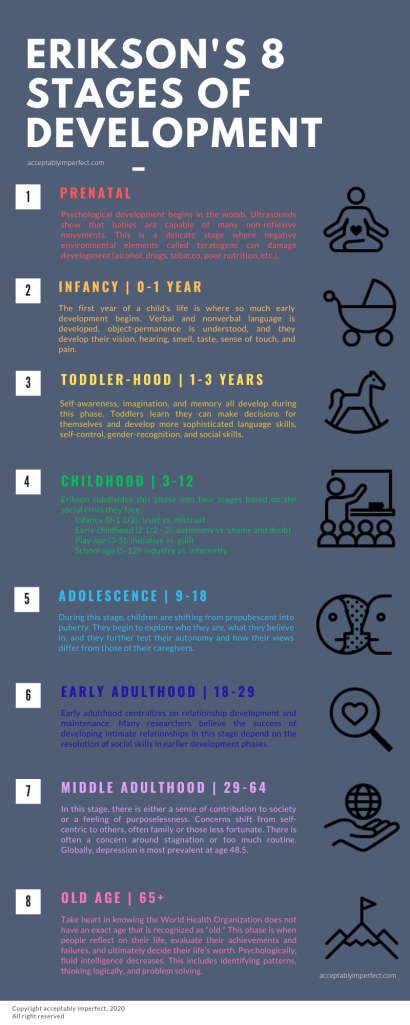
Before we jump into the studies, it’s worth defining the stages of development. A guy named Erik Erikson defined these stages in the early 1900s to classify humans by age and psychological capacity.
Baby Morality
Dr. Karen Wyne, Yale University, 1990
Goal: can babies decipher right from wrong?
Developmental stage: infancy
Sources: CNN and Yale Infant Cognition Center
What did they find?
The goal of this study was to see if a six-month-old baby could decipher between a puppet doing the right thing (helping somebody struggling) and the wrong thing (making somebody’s struggle harder). Researchers depicted these scenarios to the babies and afterward, they presented the nice puppet and the mean puppet. Babies chose the nice puppet 80% of the time, suggesting babies are born understanding right from wrong.
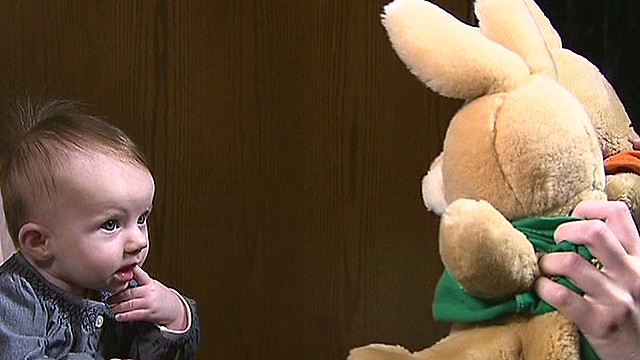
Dr. Wyne expanded the study to see if even younger babies could understand the difference between the helping puppet and the hurting puppet. When the study was repeated with three-month-olds, the same results were found! Though babies that young don’t yet reach for their preferences, they did tend to stare at the helping puppet for almost four times the amount of time. This suggests that babies as young as three months can judge morality.
There is a lot more to this study! Other findings include babies preferring those similar to them, and babies wanting fairness. Check out the study to learn more about the moral code that guides infants before they can even speak!
The Doll Test
Dr. Kenneth Clark, Dr. Mamie Clark, Northside Center for Child Development, 1946
Goal: how does race identification affect Black children?
Development stage: childhood (3-6 years old)
Sources: NAACP, Smithsonian National Museum of African American Culture, History.com, CNN
What did they find?
This is a historically significant yet simple study. Married couple Dr. Kenneth Clark and Dr. Mamie Clark conducted a study with two almost identical baby dolls. The Clarks had to paint a white baby doll brown since Black dolls had not yet been manufactured. 253 Black children were studied, ages 3-7 years old. 134 children were in the Southern Group and attended segregated schools, while the other 119, the Northern Group, attended racially mixed schools.
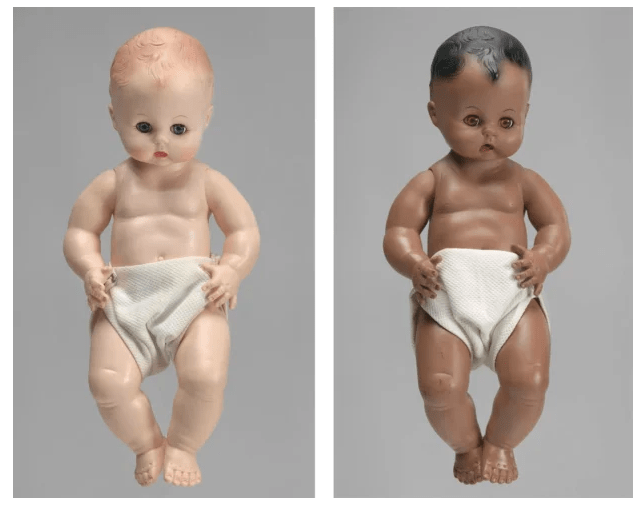
Children were presented with the two dolls and asked multiple questions such as:
Which doll would you like to play with?
Which doll looks bad?
Which doll is a nice doll?
Which doll is most like you?
Some questions were designed to test preferences and some were designed to indicate awareness of racial differences. The results were devastating. Black children who attended segregated schools were internalizing racism and self-hatred at a higher rate. They would associate positive attributes with the white doll, demonstrating a preference for lighter skin tones.
Their findings were used in the landmark Brown v. Board of Education Supreme Court case in 1954 to argue against segregation. This study demonstrated the negative impact segregation had on children and society. It’s believed that the Clarks’ findings helped land the Supreme Court’s decision to end segregation in schools.
In 2010, nearly 60 years later CNN reported on a similar study but this time using pictures of children with varying skin colors. Dr. Margaret Beale Spencer asked 133 children (Black and white participants this time) to select which of the depicted children were bad, which were ugly, and which were dumb. “White bias” was found in the majority of white children’s responses, connecting positive attributes to the lighter-skin dolls and negative attributes to the darker-skin dolls.
Dr. Spencer concluded the study by saying, “we are still living in a society where dark things are devalued and white things are valued.”
The Visual Cliff
Gibson and Walk, 1984; Dr. Karen Adolph, 2009
Goal: do babies have an innate fear of heights?
Developmental stage: infancy
Sources: Dr. Kari Sketch, Dr. Karen Adolph, New York University. Gibson and Walk, National Institute of Health, SciFri
What did they find?
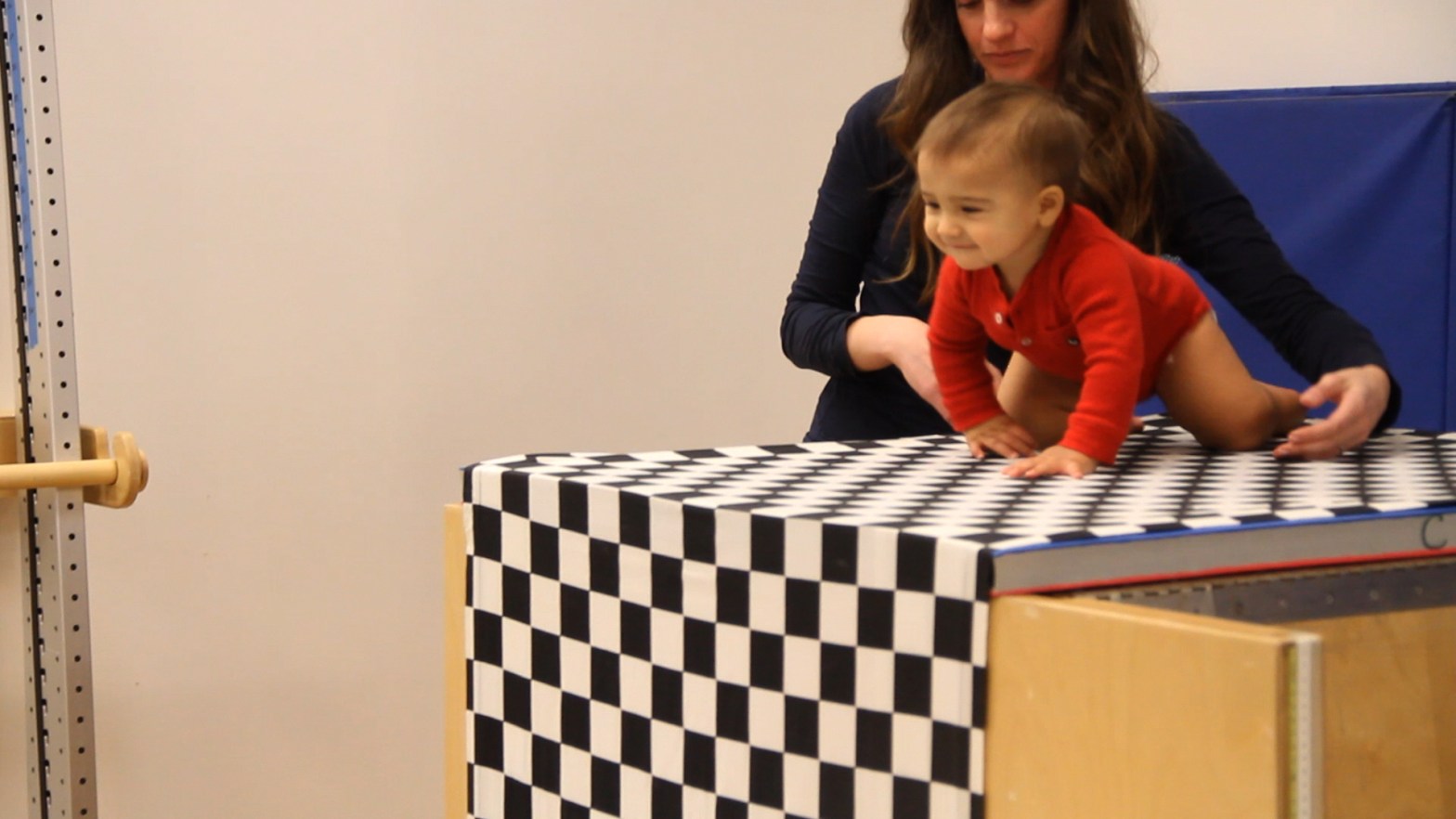
Are babies born with the fear of heights? Gibson and Walk wanted to find out! In 1970 they created a visual cliff by placing a piece of transparent plexiglass over a checkered cloth. At the halfway point, the cloth drops down creating a visual cliff (depicted below).
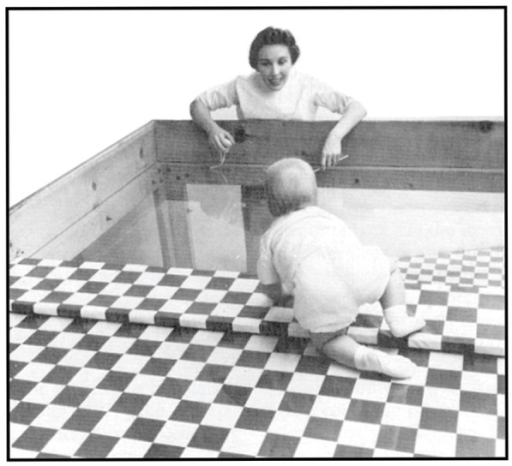
25 years later, Dr. Karen Adolph and Dr. Kari Kretch conducted a similar study and discovered something interesting. When babies were presented with a real dropoff they proceed over the edge without fear. They also crawled over narrow bridges and down steep slopes. The kids had neutral or positive facial expressions while navigating these precarious situations. This suggests that babies are not born with a fear of heights as the original study suggested. The longer babies crawl, the more they understand how to manage steps and drop-offs, and they will proceed more cautiously. Possibly because they have experienced falls as they learn to crawl and pull themselves up. However, once babies learn to walk they abandon that newfound carefulness and will walk right off a dropoff again!
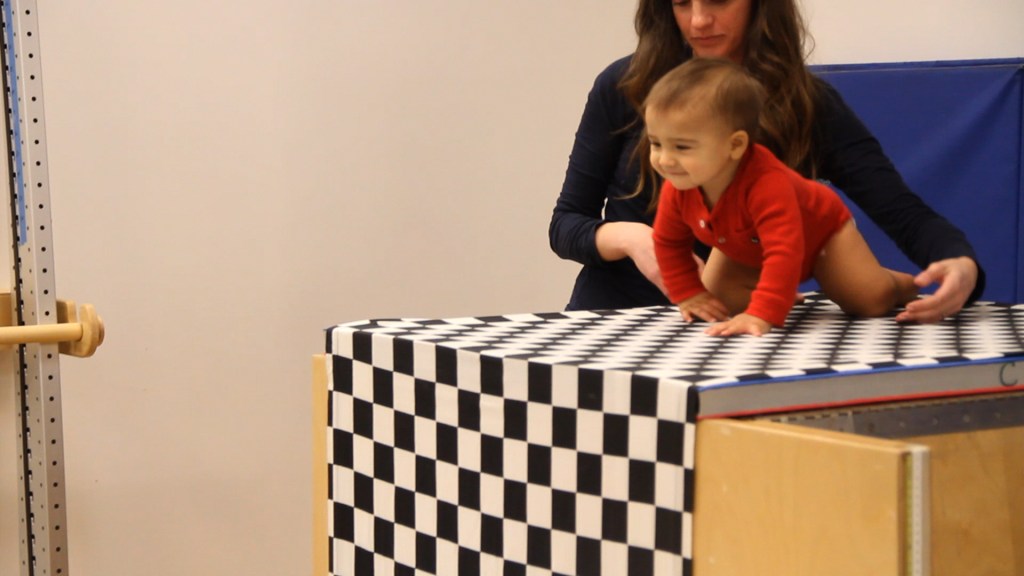
As babies learn the relationship between their bodies and their environments, they don’t show fear! It has been thought that the earlier iteration of this study was demonstrating babies’ depth perception, rather than fear of heights.
One of the study’s original researches reflected on this study later in her life and remarked that “as a goat is peering over the edge of a steep crag, it knows not to walk off the edge. I don’t think it’s feeling any emotions at all. It just knows not to go.”
Blanket and Ball Study
Jean Piaget, 1963
Goal: what age do children develop object permanence?
Developmental stage: infancy
Sources: Dr. Jean Piaget, Simply Psychology
What did they find?
At what age does a child understand that the world exists outside of what s/he can see? Object permanence is the understanding that and object still exists even if it cannot be seen. Younger infants do not yet understand object permanence, which is why young babies enjoy peek-a-boo so much.
Piaget wanted to know at which age this happens. His method was to place a toy (often a ball) under a blanket while a child was watching and observe whether or not the child searched for the missing object. Babies would search for the missing ball at around eight months old because they could now form and hold a memory of the ball in their minds, thus understanding its existence even when they couldn’t see it.
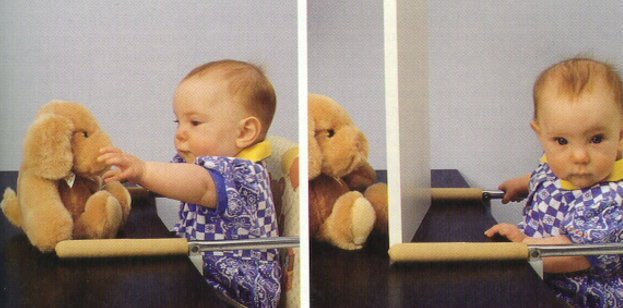
A variation of this study over 20 years later shows that babies will look for something in the place they last found it, even when they watch where you placed it.
Bobo Doll Experiment
Dr. Albert Bandura, Stanford University, 1963
Goal: are social behaviors learned by observation?
Development stage: childhood (3-6 years old)
Sources: Stanford University, Simple Psychology, Everywhere Psychology
What did they find?
Using a matched-pairs design, 72 children were sorted into three groups for this study (see chart below). The first group of 24 children saw an adult aggressively hitting an inflatable clown doll known as a Bobo doll. The second group witnessed an adult playing quietly, ignoring the bobo doll. The third group of children did not watch an adult as part of the study.
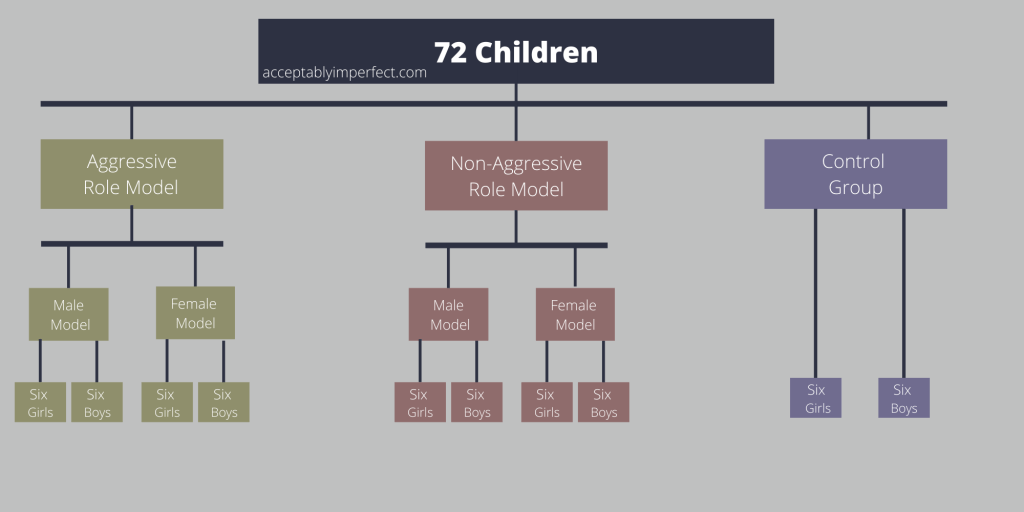
Next, children were taken to separate rooms with fun toys and were encouraged to play with the toys. Then the researcher stepped in and removed the toys, noting that they were some of her best toys and she wanted to reserve them for the other children. They were then taken to a different room containing aggressive toys (i.e. Bobo doll) and non-aggressive toys (i.e. crayons). For 20 minutes the child was observed through a one-way mirror.
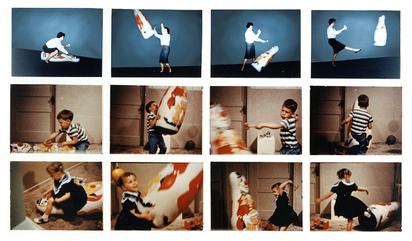
What they found was that children who saw the aggressive role model were way more likely to respond aggressively when the good toys were taken away. The girls who saw an aggressive male role model were more physically aggressive, but girls who saw an aggressive female role model were more verbally aggressive. The boys were more likely to imitate the male models than the girls were, and they mimicked the more physically aggressive acts.
This study seems to support the idea that children learn aggressive behavior by watching their caregivers, other adults, and even from what they see in movies or on TV!
 acceptably imperfect